Interactive Digital Platform | Migration Museum
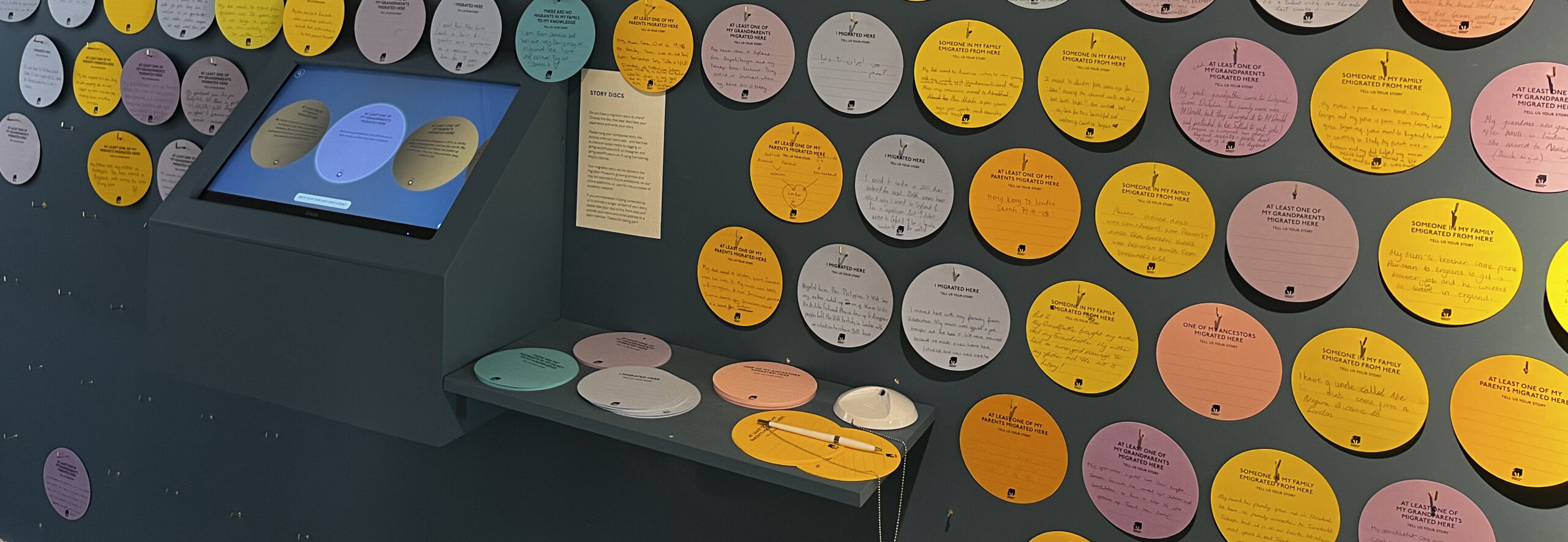
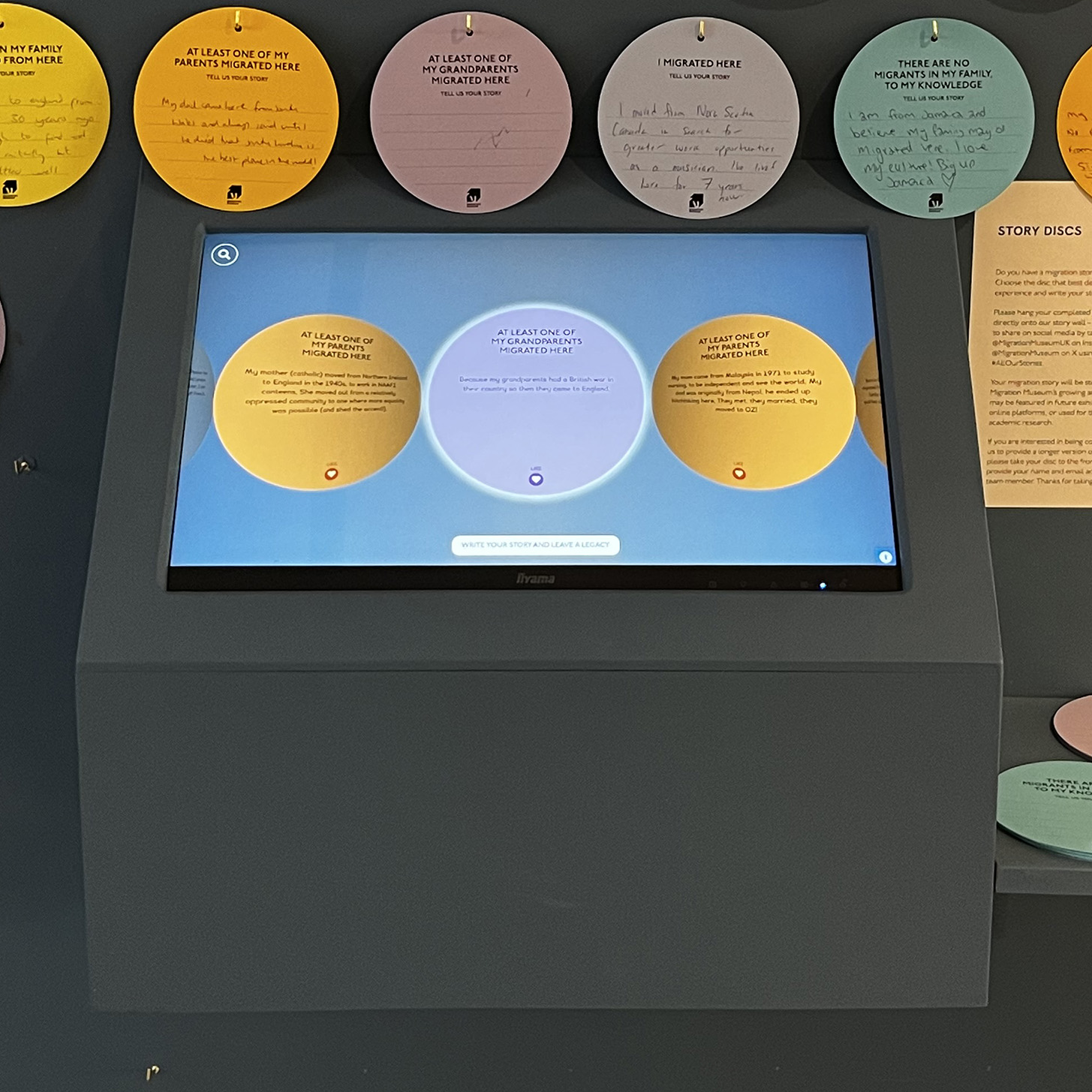
The Migration Museum is home to more than 7,000 oral stories collected over the last decade. These powerful narratives, recorded on paper discs called Migration Story Discs, tell the diverse experiences of migration. My role was to modernize the museum's approach to these stories and build a more interactive and accessible experience for both the museum team and its visitors.
The All Our Stories exhibition invites visitors to explore the reasons behind migration, the experience of arriving and settling, and the complexities of identity and belonging. It highlights how migration has shaped our world and opens a space for reflection and conversation as the museum moves towards its permanent home in central London.
Led the development of a comprehensive digital interactive system from concept to launch. Coordinated with curators, volunteers, and technical teams to transform the museum's approach to storytelling and visitor engagement.
Managed a diverse volunteer team responsible for design, coding, and data tasks. Ensured effective collaboration across different skill sets while maintaining project quality and timeline.
The museum needed to transform how their vast collection of migration stories were accessed and shared. Stories were transcribed by volunteers using Excel—a manual, time-consuming process prone to errors. The challenge was to create a system that would streamline data management, make stories more discoverable through meaningful connections, and provide an engaging, accessible interface for museum visitors.
The first step was migrating the stories from Excel into a MySQL database managed through a bespoke CMS. This shift streamlined the transcription process, improving how the team manages the vast amount of data they've curated over the years.
I implemented an automated data management system to efficiently register new migration stories:
A unique part of the project was integrating machine learning using the OpenAI API. I implemented a system to extract implicit keywords from each story, such as feelings and moods. This allowed us to create connections between stories based on emotional resonance, rather than just the written content.
By focusing on shared emotional undertones, we were able to group stories in a more meaningful and intuitive way, adding a new dimension to the storytelling experience.
The AI system identifies:
This approach enables:
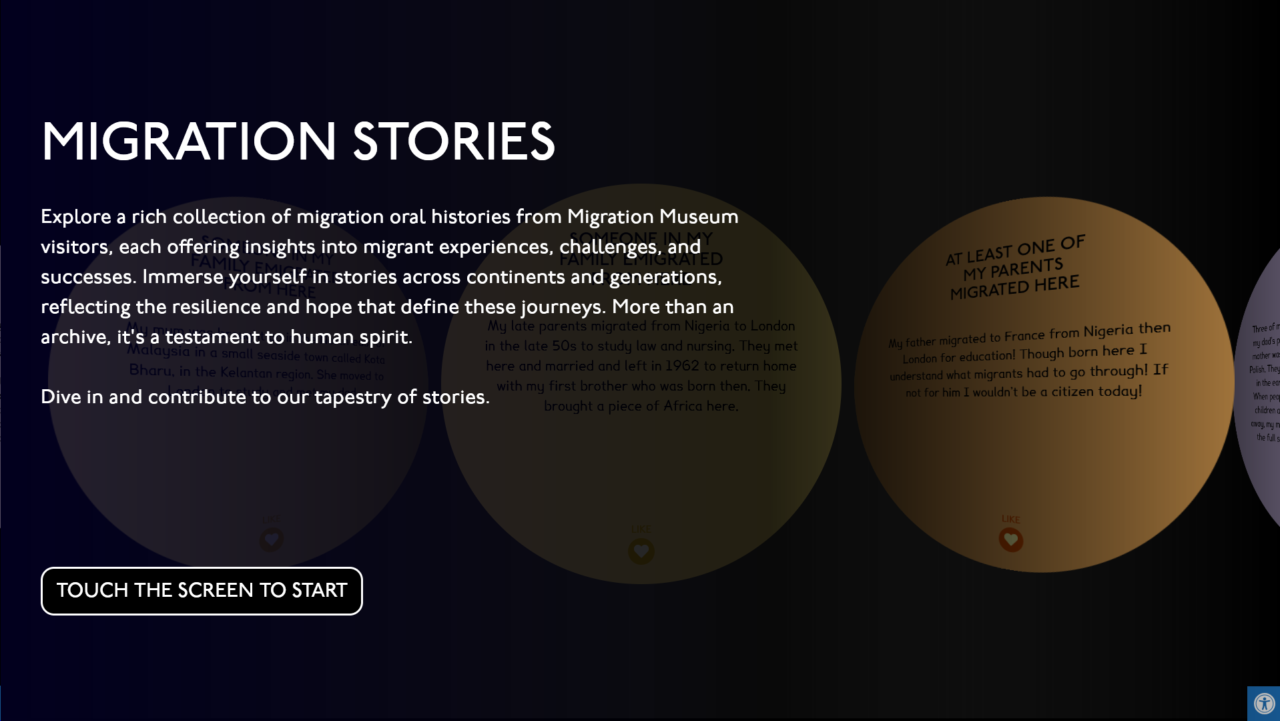
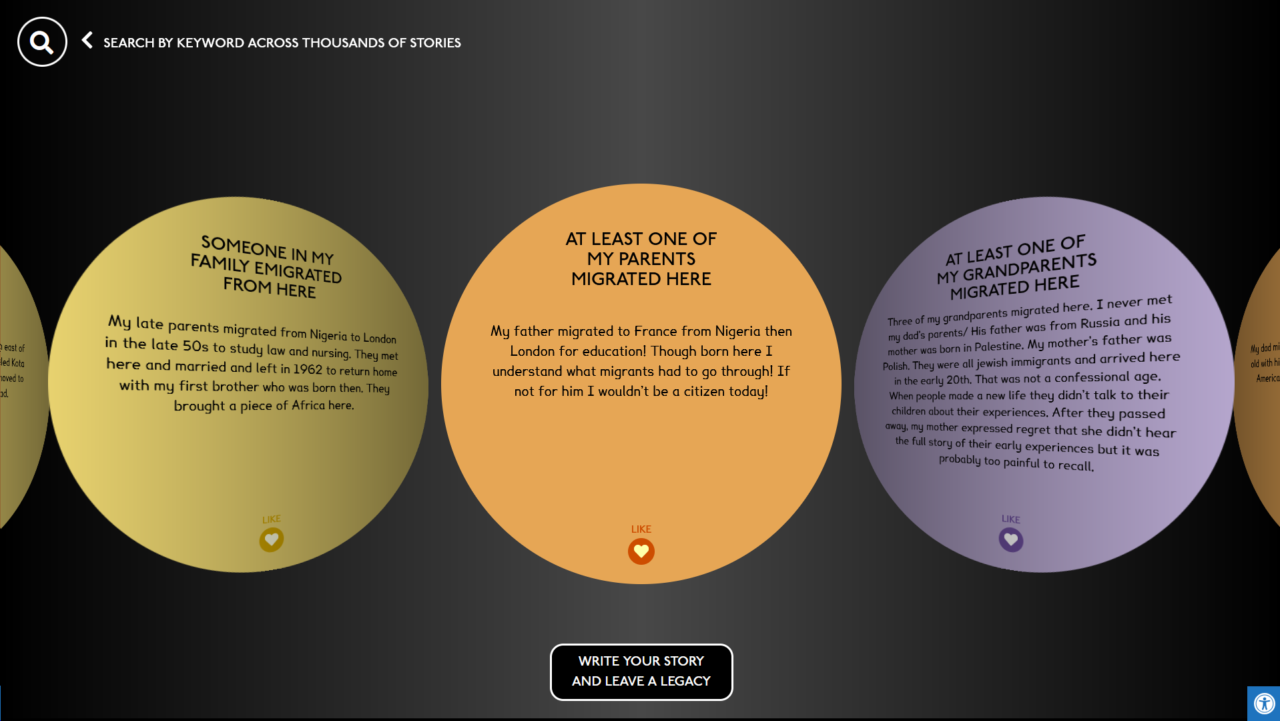
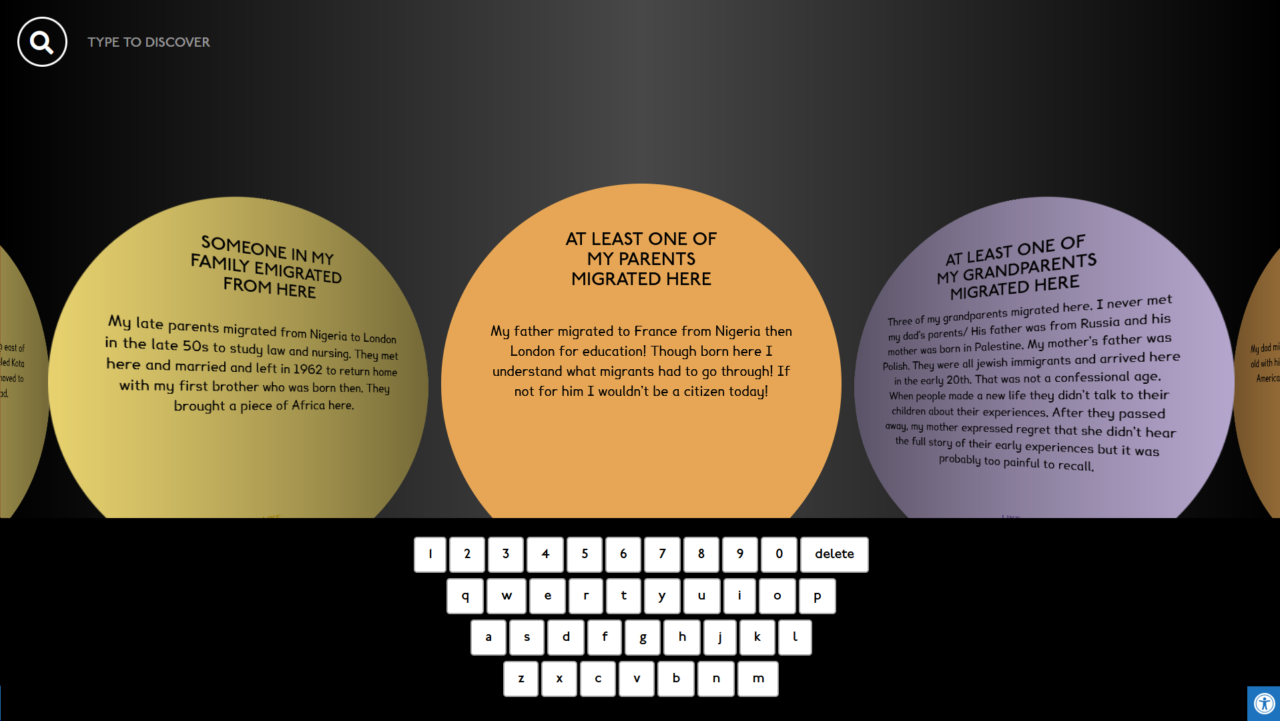
The real challenge was to design a way for museum visitors to engage directly with these stories. Together with the team, we envisioned an interactive kiosk where visitors could search, explore, vote for their favorite stories, and even contribute their own.
The software is built on HTML, PHP, and MySQL, creating a seamless experience for the museum's new exhibition.
The interactive system allows users to filter migration story discs by multiple parameters:
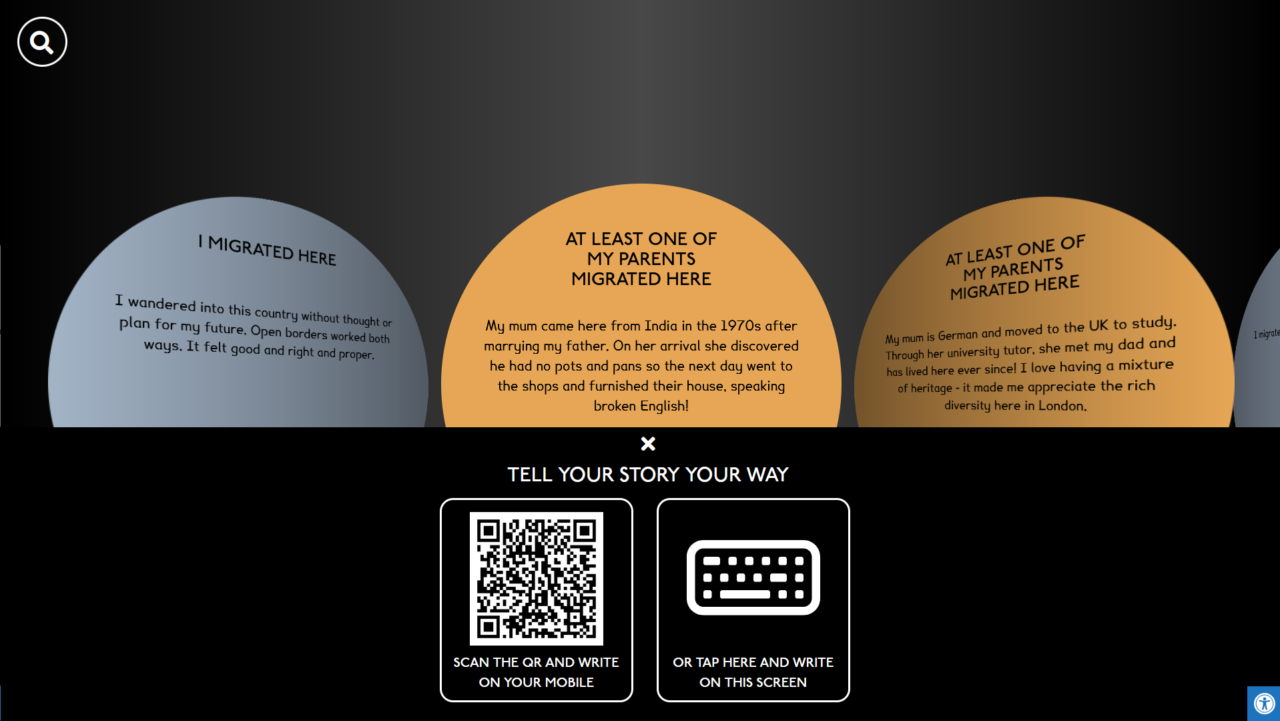
Accessibility was a central focus in the design. By integrating QR codes and NFC tag technology, visitors can connect the kiosk with their personal mobile devices, allowing them to use their own accessibility settings—whether that's screen readers, contrast adjustments, font size, or even translation apps like Google Translate.
This bring-your-own-device approach ensures everyone, regardless of their needs, can engage with the exhibition in a way that's comfortable and familiar.
This project significantly improved the Migration Museum's visitor experience by providing an engaging platform to explore migration stories. The successful deployment of the interactive system and efficient data management solution underscored the museum's commitment to innovation and accessibility. I'm proud to have played a part in bringing these stories to life in a way that's not only interactive and accessible but also designed to spark new stories and ideas for future generations.